
Launching a professional website is a significant achievement, but it’s only the beginning of your online journey. Just like a car needs regular servicing to perform at its best, your website requires ongoing maintenance to remain secure, fast, and reliable.
Many business owners assume that once a website is live, it can run on its own indefinitely. Unfortunately, that’s rarely the case. Software updates, security threats, changing technologies, and evolving customer expectations mean that every website needs regular attention.
A website maintenance plan ensures your business stays protected, performs efficiently, and continues delivering a great experience for your visitors.
What Is a Website Maintenance Plan?
A website maintenance plan is an ongoing service that keeps your website healthy after launch. Instead of waiting for something to break, maintenance focuses on preventing issues before they affect your business.
A professional maintenance plan typically includes:
- Regular software updates
- Security monitoring
- Website backups
- Performance optimization
- Broken link checks
- Bug fixes
- Content updates
- Technical support
Rather than reacting to problems, you’re proactively keeping your website in excellent condition.
1. Protect Your Website from Security Threats
Cyber threats continue to evolve, and outdated websites are often the easiest targets.
Whether your website is built on WordPress or another platform, outdated plugins, themes, or software can create vulnerabilities that hackers may exploit.
A maintenance plan helps by:
- Installing security updates promptly
- Monitoring suspicious activity
- Removing malware if detected
- Strengthening website security settings
- Performing regular vulnerability checks
Protecting your website also protects your customers’ trust.
2. Keep Your Website Running Smoothly
Technology changes constantly.
Browsers receive updates, hosting environments evolve, and website software continues to improve. Without regular maintenance, your website may eventually experience compatibility issues.
Routine maintenance helps ensure that:
- Pages load correctly
- Forms continue working
- Navigation remains functional
- Interactive features perform as expected
- New browser versions don’t break your site
Small issues caught early are far easier—and less expensive—to fix.
3. Improve Website Performance
Visitors expect fast-loading websites.
Over time, websites can become slower due to growing databases, unused files, outdated plugins, or oversized media.
A maintenance plan includes regular performance reviews to identify opportunities for improvement.
Performance optimization may involve:
- Cleaning unnecessary files
- Optimizing images
- Improving database efficiency
- Removing unused resources
- Monitoring page loading times
A faster website creates a better experience for your visitors and encourages them to stay longer.
4. Prevent Unexpected Downtime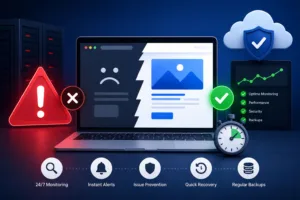
Imagine discovering that your website has been offline for several days without realizing it.
Every hour your website is unavailable can result in lost opportunities, missed inquiries, and frustrated customers.
Website maintenance includes routine monitoring to identify problems quickly, allowing them to be resolved before they significantly impact your business.
Reliable websites build confidence and credibility.
5. Keep Your Content Fresh
Your business evolves, and your website should evolve with it.
Outdated information can confuse visitors and create the impression that your business is inactive.
A maintenance plan makes it easier to update:
- Service information
- Pricing
- Team members
- Portfolio projects
- Testimonials
- Blog articles
- Contact details
Fresh content also gives returning visitors a reason to come back.
6. Protect Your Investment with Regular Backups
Unexpected problems can happen at any time.
A plugin conflict, server issue, or accidental deletion could cause significant damage if no backup exists.
Regular backups provide a safety net, allowing your website to be restored quickly with minimal disruption.
Think of backups as insurance for your digital business.
7. Improve User Experience
Website maintenance isn’t only about fixing technical issues.
It’s also about continuously improving how visitors interact with your website.
Regular reviews can identify opportunities to:
- Simplify navigation
- Improve mobile usability
- Update calls to action
- Fix broken links
- Enhance page layouts
- Remove outdated content
Small improvements over time create a noticeably better experience.
8. Support Better Search Engine Performance
Search engines prefer websites that provide a positive experience.
Regular maintenance helps by ensuring your website remains:
- Fast
- Secure
- Mobile-friendly
- Free of broken links
- Technically healthy
These improvements create a stronger foundation for long-term search visibility while providing a better experience for your visitors.
Signs Your Website Needs Maintenance
If you notice any of the following, it’s probably time to invest in ongoing website care:
- Pages load slowly
- Broken images or links appear
- Forms stop working
- Security warnings appear
- Outdated information remains online
- Plugins or software haven’t been updated for months
- Visitors report errors
- You haven’t backed up your website recently
Ignoring these issues often leads to larger, more expensive problems later.
Why Businesses Choose a Website Maintenance Plan
Managing a website takes time, technical knowledge, and ongoing attention.
For many businesses, outsourcing website maintenance allows them to focus on serving customers while experienced professionals handle the technical side.
A maintenance plan offers peace of mind by ensuring your website stays secure, up to date, and ready to support your business every day.
How Our Digital Agency Helps
Our website maintenance plans are designed to keep your business website performing at its best.
We provide ongoing monitoring, security updates, backups, performance optimization, content assistance, and technical support so you can focus on growing your business instead of worrying about website issues.
Whether you operate a small business website or a growing eCommerce store, we help ensure your website remains a reliable asset—not a source of stress.
Final Thoughts
Your website is one of your business’s most valuable digital assets. Leaving it unattended after launch can lead to security risks, slower performance, outdated content, and lost opportunities.
A website maintenance plan keeps your website secure, efficient, and ready to support your business goals long after launch.
Investing in ongoing maintenance isn’t simply about preventing problems—it’s about protecting your online reputation, delivering a better customer experience, and ensuring your website continues to grow alongside your business.
A well-maintained website is a website that continues to work for you every single day.