
When business owners think about website success, they often focus on design, content, and marketing. While those elements are important, there’s another factor that can significantly impact your online performance: website experience.
This is where Core Web Vitals come into play.
Core Web Vitals are a set of performance measurements that evaluate how quickly, smoothly, and reliably users can interact with your website. They help determine whether visitors enjoy using your site or become frustrated and leave. If your website feels slow, jumps around while loading, or responds sluggishly to clicks, it could be costing you leads, sales, and search visibility.
In this guide, we’ll explain what Core Web Vitals are, why they matter, and how they can directly affect your business growth.
What Are Core Web Vitals?
Core Web Vitals are user experience metrics designed to measure the real-world performance of a website. Rather than simply testing technical speed, these metrics focus on how visitors actually experience your website.
Think of them as a health report card for your site’s usability.
They answer questions like:
- How quickly does the main content appear?
- How responsive is the website when someone clicks a button?
- Does the page remain stable while loading?
A website that performs well in these areas generally provides a better experience for visitors.
The Three Core Web Vitals Explained
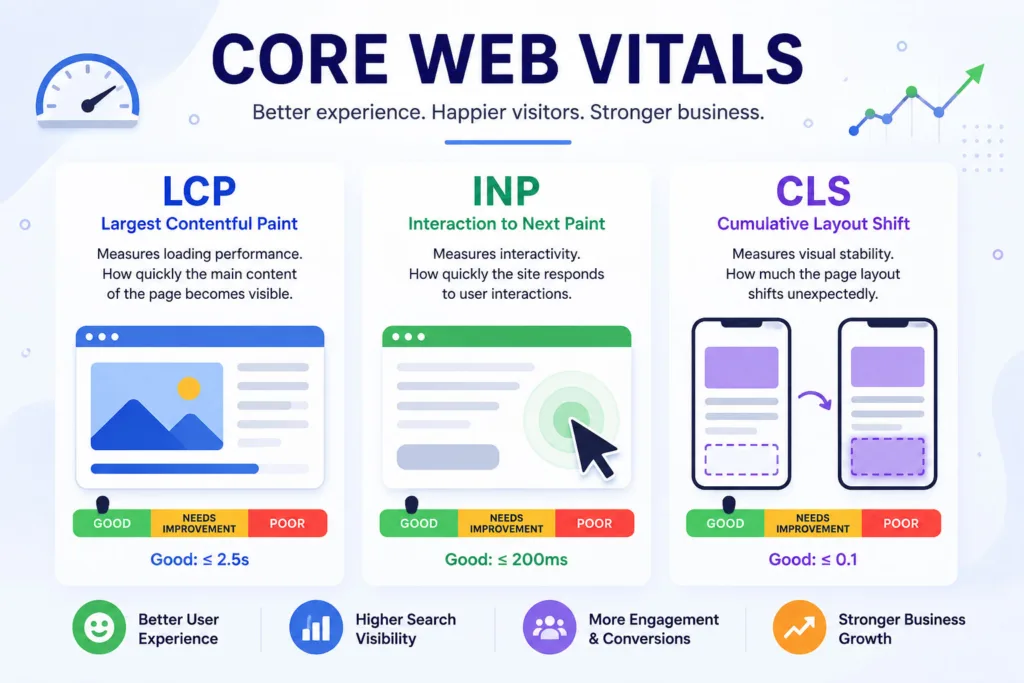
1. Largest Contentful Paint (LCP)
LCP measures how long it takes for the main content of a page to become visible.
Examples include:
- A hero image
- A large heading
- A featured banner
- A product image
If visitors have to wait too long before seeing meaningful content, they may leave before the page fully loads.
Why It Matters
Fast-loading pages:
- Create a positive first impression
- Reduce visitor frustration
- Increase engagement
- Improve conversion opportunities
A slow-loading homepage can cause potential customers to abandon your site before learning about your services.
2. Interaction to Next Paint (INP)
INP measures how quickly a website responds when a user interacts with it.
Examples include:
- Clicking a button
- Opening a menu
- Submitting a form
- Selecting a product option
Visitors expect instant feedback when they interact with a website.
Why It Matters
When a website feels responsive:
- Users trust the platform more
- Navigation feels smoother
- Forms are easier to complete
- Customers stay engaged longer
Slow interactions can make even a visually beautiful website feel outdated and unreliable.
3. Cumulative Layout Shift (CLS)
CLS measures visual stability.
Have you ever tried clicking a button and suddenly the page shifted, causing you to click something else by accident?
That’s a layout shift.
Common causes include:
- Images loading without reserved space
- Ads appearing unexpectedly
- Dynamic content pushing elements around
Why It Matters
A stable website:
- Feels professional
- Improves usability
- Reduces accidental clicks
- Builds visitor confidence
Unstable pages create frustration and make your business appear less trustworthy.
How Core Web Vitals Affect Your Business
Many business owners assume Core Web Vitals are only important for developers or SEO specialists.
In reality, they can influence several critical business outcomes.
Better User Experience
User experience is often the deciding factor between gaining a customer and losing one.
Visitors expect websites to:
- Load quickly
- Respond immediately
- Function smoothly
When your site performs well, people are more likely to stay, explore, and engage with your content. A positive experience encourages trust and increases the likelihood of conversions.
Higher Search Visibility
Search engines aim to provide users with high-quality experiences. Because Core Web Vitals measure real-world usability, they can contribute to how search engines evaluate your website. While great content remains essential, a faster and more user-friendly website has an advantage over competitors with poor performance.
Improved visibility can lead to:
- More organic traffic
- Greater brand awareness
- Increased lead generation
Increased Conversion Rates
Every second matters when it comes to online conversions.
Slow-loading pages can discourage visitors from:
- Filling out contact forms
- Requesting quotes
- Making purchases
- Booking appointments
A faster website removes friction from the customer journey and makes it easier for visitors to take action. Small performance improvements often produce noticeable increases in conversions.
Lower Bounce Rates
Bounce rate refers to visitors leaving your website without further engagement. One common reason for high bounce rates is poor website performance.
If visitors encounter:
- Slow load times
- Unresponsive buttons
- Shifting layouts
they may leave before exploring your services. Improving Core Web Vitals can help keep visitors engaged for longer periods.
Stronger Brand Credibility
Your website is often the first interaction potential customers have with your business.
A fast, polished website communicates:
- Professionalism
- Reliability
- Attention to detail
A slow or unstable website can create the opposite impression. In many cases, website performance influences how trustworthy a company appears.
Common Causes of Poor Core Web Vitals
Many websites struggle with performance because of avoidable issues.
Examples include:
- Oversized images
- Excessive plugins
- Poor hosting environments
- Unoptimized code
- Too many third-party scripts
- Auto-playing media
- Large animation libraries
Addressing these issues often results in substantial performance improvements.
How to Improve Core Web Vitals
Business owners don’t necessarily need to become technical experts, but understanding the basics can help guide website improvements.
Start with These Steps:
- Compress and optimize images
- Use high-quality hosting
- Remove unnecessary plugins
- Minimize large scripts
- Enable caching
- Improve mobile performance
- Reserve space for images and dynamic content
- Regularly test website speed and usability
Even small changes can create a noticeably better user experience.
Why Core Web Vitals Matter More in 2026
Internet users continue to expect faster and smoother digital experiences every year. As competition grows, businesses can no longer rely solely on attractive design. Visitors compare your website experience not only to your competitors but also to the best websites they use every day.
Businesses that prioritize performance gain advantages in:
- Customer satisfaction
- Lead generation
- Search visibility
- Conversion rates
- Brand perception
Core Web Vitals provide a practical framework for delivering those experiences.
Final Thoughts
Core Web Vitals are more than technical performance metrics—they are indicators of how real people experience your website. A site that loads quickly, responds instantly, and remains visually stable creates a better impression, keeps visitors engaged, and supports business growth. Whether you’re running a local service business, an eCommerce store, or a corporate website, improving Core Web Vitals can help you attract more visitors, generate more leads, and create a stronger online presence.
In today’s digital landscape, website performance isn’t just a technical concern—it’s a business advantage.